

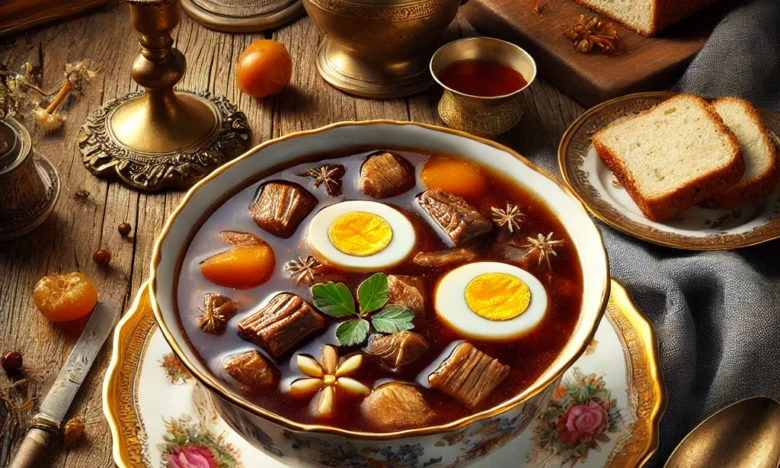
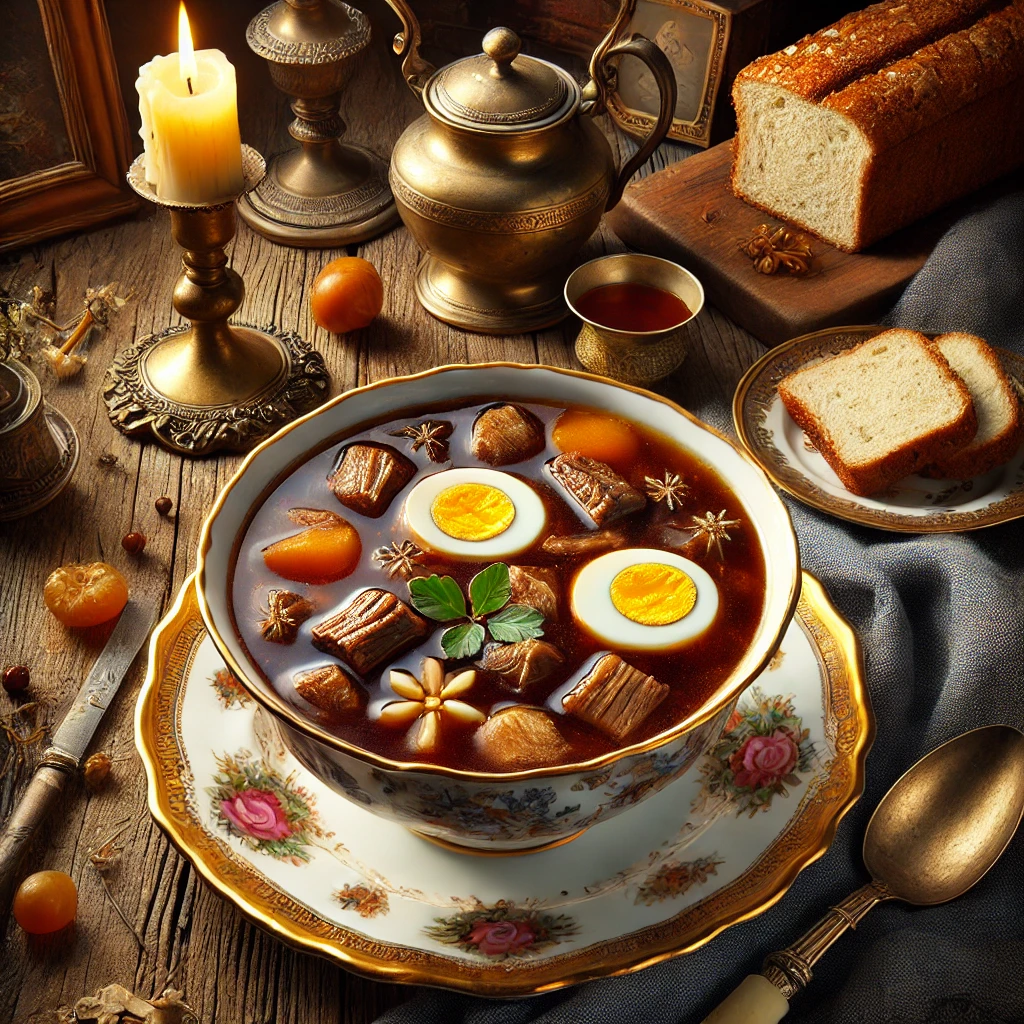
A Taste of 1900s Dinner
During the early 1900s, Mock Turtle Soup was a beloved dish served in fine dining establishments, grand hotels, and home kitchens alike. Inspired by the English tradition of Turtle Soup, this dish became a popular and economical alternative for those who couldn’t afford real turtle meat, which was expensive and often difficult to source.
Rather than using actual turtle meat, cooks substituted calf’s head or veal, mimicking the rich, gelatinous texture of turtle flesh. The soup was often seasoned with sherry, lemon, and aromatic spices, giving it a deep, savory flavor that delighted diners during the Gilded Age and beyond.
The History Behind Turn-of-the-Century Mock Turtle Soup
Turtle Soup was a delicacy in 18th and 19th-century Europe and America, frequently served at banquets and high-society gatherings. However, as real turtles became scarcer and more expensive, home cooks and restaurant chefs sought an alternative.
The result was Mock Turtle Soup, a dish that became just as popular—if not more so—than its authentic counterpart. By the early 1900s, it was featured in cookbooks, restaurant menus, and even canned varieties sold by major food brands.
Interesting Facts:
- The dish was so widespread that Lewis Carroll referenced it in Alice’s Adventures in Wonderland (1865), with a character known as the Mock Turtle.
- Canned Mock Turtle Soup was commercially available in the early 20th century, produced by brands such as Campbell’s.
- It was often served with hard-boiled eggs and lemon slices, mimicking the texture and bright flavor of real turtle meat.
- The dish remained popular until the mid-20th century, when changes in food preferences and availability caused it to fade from American menus.
The Original Recipe (As Written in History)
This authentic early 1900s Mock Turtle Soup recipe is adapted from The White House Cookbook (1901):
Mock Turtle Soup (1901 Version)
Ingredients:
- 1 calf’s head (cleaned and boiled)
- 4 quarts water
- 1 onion, chopped
- 2 carrots, diced
- 1 bay leaf
- ½ teaspoon mace
- ½ teaspoon allspice
- 1 teaspoon salt
- ½ teaspoon black pepper
- 2 tablespoons butter
- 2 tablespoons flour
- ½ cup sherry
- 2 hard-boiled eggs, chopped
- 1 lemon, sliced
Instructions:
- Boil the calf’s head in 4 quarts of water until the meat is tender, about 2–3 hours. Remove and chop the meat finely.
- In a separate pot, sauté onion, carrots, and butter, then stir in flour to form a roux.
- Add strained broth from the boiled head, stirring to thicken.
- Season with bay leaf, mace, allspice, salt, and pepper, then add chopped meat back into the pot.
- Simmer for 30 minutes, then stir in sherry, hard-boiled eggs, and lemon slices.
- Serve hot with crusty bread.
(Original terminology preserved for historical authenticity.)
Modern Adaptation for Today’s Kitchen
Since calf’s head is not commonly used today, this updated version uses beef shank or oxtail, which provide the same rich, gelatinous texture while being easier to find.
Ingredients:
✅ 2 pounds beef shank or oxtail
✅ 8 cups beef broth (or water)
✅ 1 onion, diced
✅ 2 carrots, diced
✅ 1 celery stalk, chopped
✅ 2 tablespoons butter
✅ 2 tablespoons flour
✅ 1 teaspoon salt
✅ ½ teaspoon black pepper
✅ ¼ teaspoon ground allspice
✅ ¼ teaspoon ground mace (or nutmeg)
✅ ½ cup dry sherry (or white wine)
✅ 2 hard-boiled eggs, chopped
✅ 1 lemon, sliced
Instructions:
- In a large pot, add beef shank or oxtail and cover with beef broth. Bring to a boil, then reduce heat and simmer for 2 hours, or until the meat is tender.
- Remove the meat from the pot, finely chop it, and return it to the broth.
- In a separate pan, melt butter over medium heat, stir in flour, and cook for 1 minute to form a roux.
- Add onion, carrots, celery, and spices to the roux, cooking until vegetables soften.
- Stir the vegetable mixture into the broth and simmer for 30 minutes.
- Add sherry, then gently stir in chopped hard-boiled eggs and lemon slices before serving.
- Serve hot with buttered toast or crusty bread.
🔹 Tip: For a richer, deeper flavor, cook the soup a day ahead and reheat before serving!
Tasting Notes & My Experience
Mock Turtle Soup is rich, hearty, and deeply flavorful, with a silky texture from the slow-cooked meat. The sherry and lemon add a bright contrast, making it both savory and slightly tangy.
Compared to modern beef stew, Mock Turtle Soup is thicker and more complex, thanks to spices like allspice and mace. The chopped hard-boiled eggs add texture, mimicking the consistency of real turtle meat.
Suggestions for Variations:
- For a smoother soup, blend part of the broth before adding the meat back in.
- For a smoky depth, add a splash of Worcestershire sauce.
- For a Southern twist, serve over rice instead of with bread.
Final Thoughts
If you’re looking for a historic, elegant dish that showcases the creativity of early 20th-century cooking, Turn-of-the-Century Mock Turtle Soup is a must-try! This soup is rich, unique, and full of nostalgia, perfect for a vintage dinner experience.
💬 Have you ever tried Mock Turtle Soup? What’s your favorite historic dish? Let me know in the comments!
🍽️ Looking for more forgotten recipes? Check out:
👉 [Gilded Age Oyster Pie – A Luxurious 1890s Dish]
👉 [Victorian Steamed Suet Pudding – A Classic 1800s Dessert]