

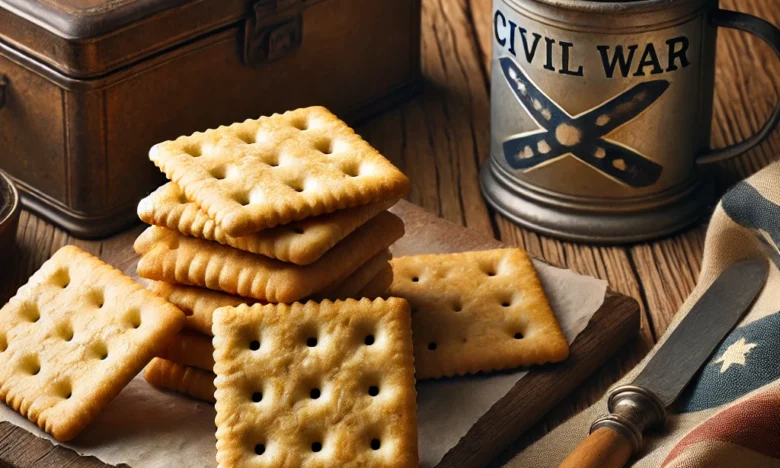
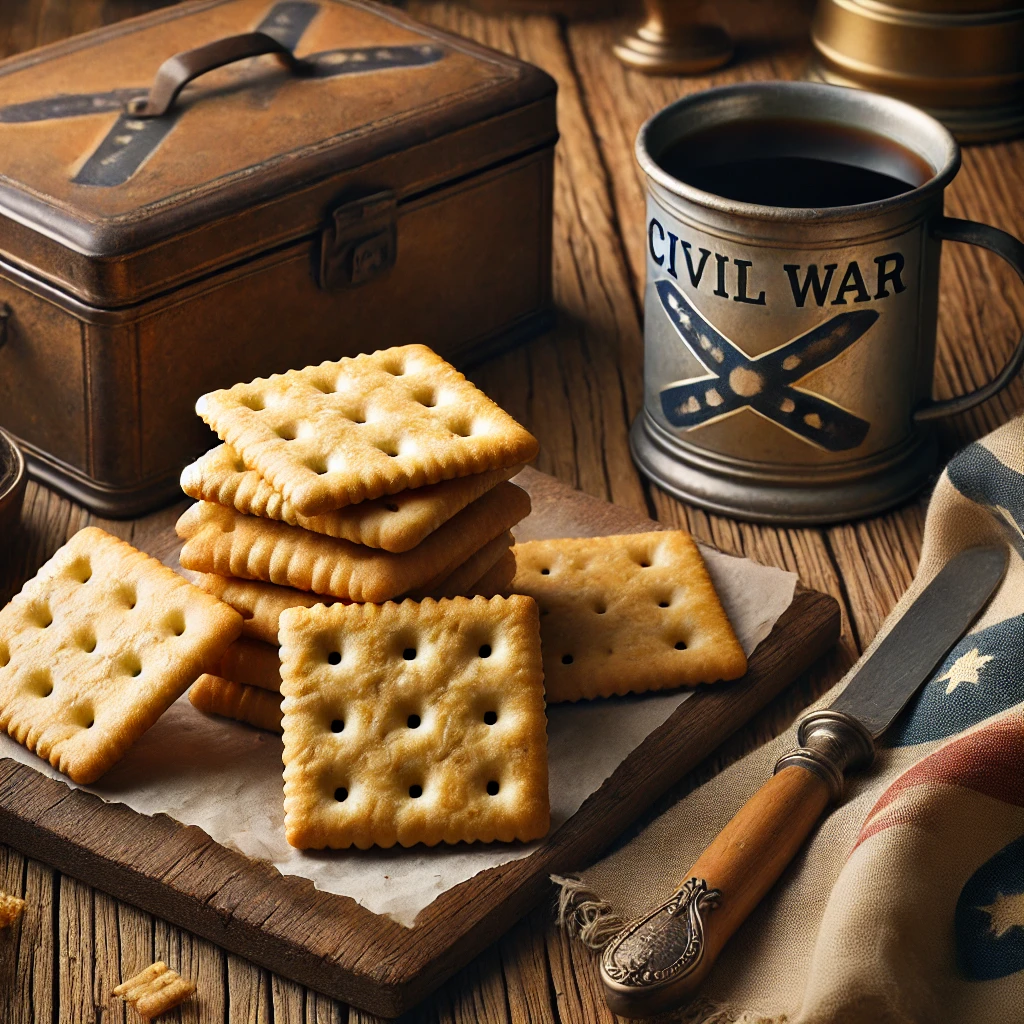
Civil War Hardtack Biscuits A Taste of 1860s Survival Food
During the American Civil War (1861–1865), soldiers needed long-lasting, durable food that could withstand harsh conditions. Hardtack biscuits—a simple, dense cracker made from just flour, water, and salt—became a staple ration for both Union and Confederate armies.
Nicknamed “tooth dullers” and “sheet iron crackers,” hardtack was notorious for its rock-hard texture. It was often soaked in coffee, water, or stew to make it edible and easier to chew. While not a gourmet meal, hardtack was lifesaving for soldiers, providing essential carbohydrates for energy during long marches and battles.
The History Behind Civil War Hardtack Biscuits
Hardtack has origins dating back centuries, used by sailors, explorers, and armies due to its long shelf life. It was a variation of ship’s biscuits, which had sustained navies as early as the 1500s.
By the time of the Civil War, hardtack was mass-produced in factories and distributed in wooden crates to soldiers. These biscuits were often months or even years old by the time they reached the battlefield, sometimes containing weevils (insects) due to poor storage.
Interesting Facts:
- Some soldiers toasted and crumbled hardtack into coffee, creating a dish called “coffee soup.”
- Hardtack was so durable that some soldiers carved it into souvenirs, buttons, and even playing cards.
- Civilians also used hardtack in soups and stews, especially in wartime kitchens where fresh bread was scarce.
- Surviving hardtack biscuits from the Civil War era still exist in museums today!
The Original Recipe (As Written in History)
This authentic 1860s Hardtack recipe is adapted from Civil War-era military records and soldiers’ diaries.
Hardtack (1860s Version)
Ingredients:
- 2 cups flour
- ½ to 1 teaspoon salt
- ½ cup water
Instructions:
- Preheat oven to 375°F.
- In a bowl, mix flour and salt together.
- Gradually add water, stirring until a stiff dough forms.
- Roll out dough to ½-inch thickness and cut into squares (about 3×3 inches).
- Use a fork or skewer to poke holes in each biscuit to prevent puffing.
- Place on an ungreased baking sheet and bake for 30–35 minutes, flipping halfway.
- Let cool completely before storing in a dry, airtight container.
(Original terminology preserved for historical authenticity.)
Modern Adaptation for Today’s Kitchen
While the original hardtack was meant to be tough and long-lasting, this updated version is a little more palatable while still authentic.
Ingredients:
✅ 2 cups all-purpose flour (or whole wheat for a heartier version)
✅ 1 teaspoon salt
✅ ½ cup water (or milk for a softer texture)
✅ 1 tablespoon butter (optional, for a slightly richer taste)
Instructions:
- Preheat oven to 375°F and line a baking sheet with parchment paper.
- In a large bowl, whisk together flour and salt.
- Add water slowly, mixing until the dough becomes stiff. (If using butter, cut it into the flour before adding water.)
- Roll out the dough to ½-inch thickness and cut into squares.
- Poke holes into each biscuit using a fork.
- Bake for 30–35 minutes, flipping halfway, until biscuits are dry and hard.
- Let cool completely before storing.
🔹 Tip: For a crunchier texture, bake at a lower temperature (300°F) for 45–50 minutes to dry the biscuits out further.
Tasting Notes & My Experience
Hardtack is dry, crunchy, and very plain, making it a survival food rather than a culinary delight. When freshly baked, it’s mildly crispy with a slightly nutty taste from the toasted flour. However, once it fully hardens, it requires soaking in liquid to eat comfortably.
Compared to modern crackers or biscuits, hardtack is denser and much less flavorful, but it holds up incredibly well over time—making it a fascinating historical survival food.
Suggestions for Variations:
- For a more flavorful version, add black pepper, dried herbs, or honey.
- For a softer biscuit, substitute half the water with milk or buttermilk.
- For extra crispness, bake twice (like biscotti) to remove all moisture.
Final Thoughts
If you love historical food experiments, Civil War Hardtack is a must-try! It’s a great way to experience history firsthand, and it pairs well with stews, soups, or even peanut butter for a modern twist.
💬 Have you ever tried making historical survival foods? What’s your favorite vintage recipe? Let me know in the comments!
🍽️ Looking for more forgotten recipes? Check out:
👉 [Rustic Pioneer Sourdough Biscuits – A Taste of 1800s Frontier Cooking]
👉 [World War II Victory Garden Soup – A 1940s Classic]