

Introduction
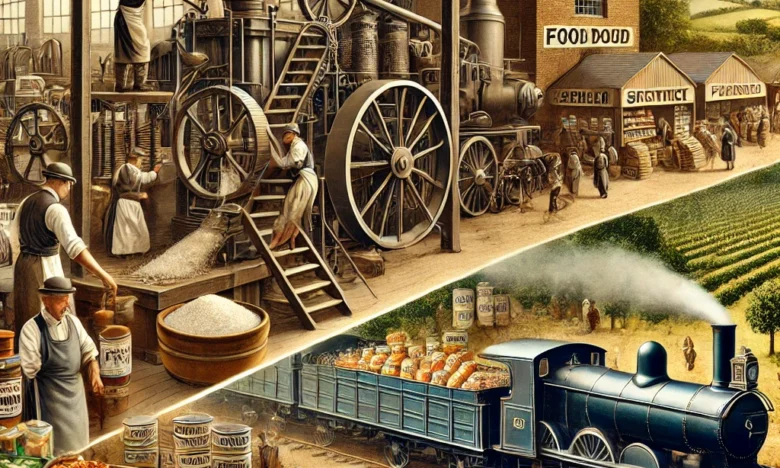
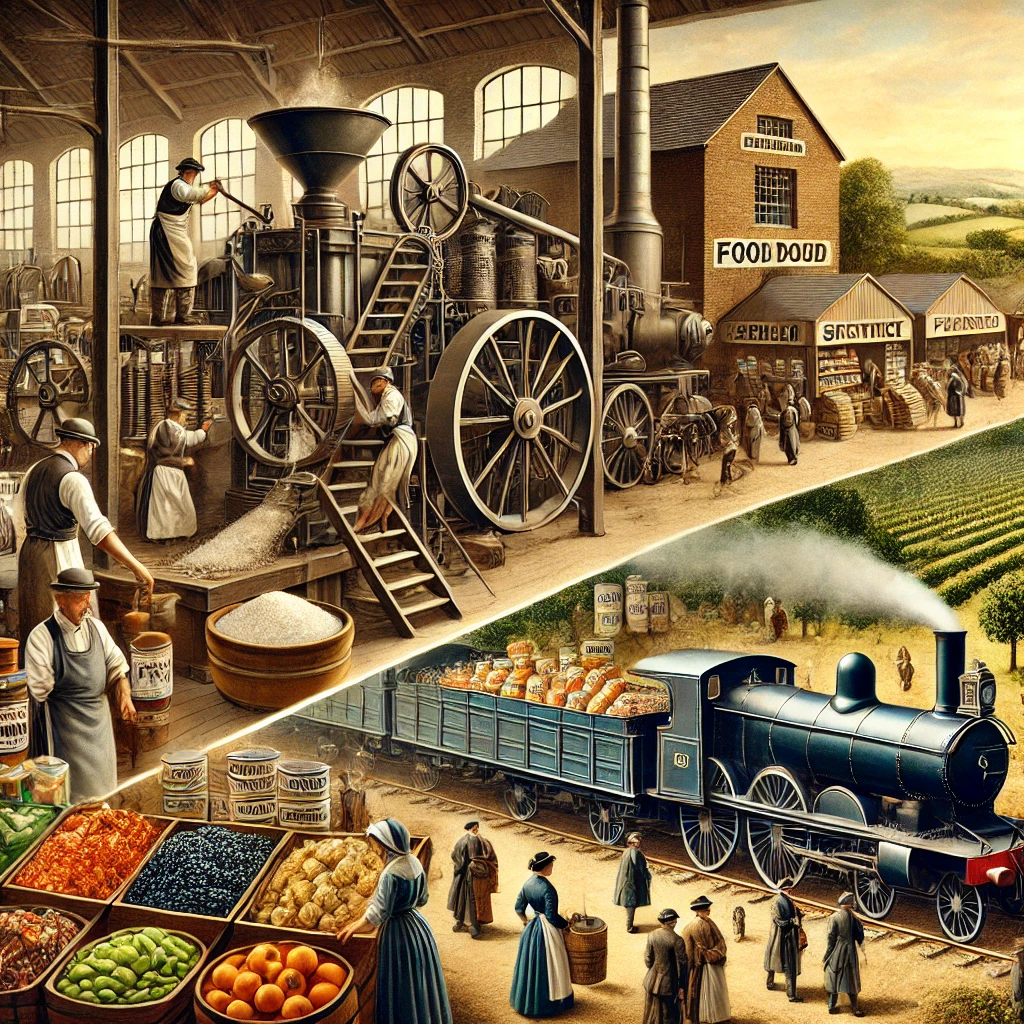
The Industrial Revolution (1760-1840) was a period of rapid technological and societal change that reshaped every aspect of life—including the way we eat. With new machinery, transportation, and mass production, food became more accessible, varied, and processed than ever before. This transformation laid the foundation for modern food systems, from factory-made bread to global trade networks. But how exactly did the Industrial Revolution change our diets? Let’s take a closer look.
The Industrial Revolution and Its Impact on Food
1. Mass Production and Processed Foods
One of the biggest impacts of the Industrial Revolution was the ability to mass-produce food using machinery, making it more affordable and widely available.
Key Innovations:
- Milling Machines – Allowed for mass production of refined flour, leading to the rise of white bread.
- Canning and Preservation – The invention of the tin can in the early 1800s allowed food to be stored for long periods.
- Factory Bakeries – Large-scale bread production made baked goods cheaper and more consistent in quality.
How It Changed Diets:
- More people had access to affordable bread, biscuits, and other baked goods.
- Processed and preserved foods became staples, reducing the reliance on seasonal eating.
2. The Rise of Fast and Convenient Foods
With urbanization and factory jobs requiring long hours, people needed quick and easy food options.
Changes That Occurred:
- Ready-to-Eat Foods – Pre-packaged meals and snacks started appearing in stores.
- Street Food Growth – Cities saw an increase in street vendors selling quick meals to factory workers.
- Shift from Home Cooking – More working-class families relied on bakeries and markets instead of preparing food from scratch.
Long-Term Impact:
- The convenience food trend set the stage for today’s fast-food culture.
- People consumed more sugar, salt, and fat as processed foods became more common.
3. Advancements in Food Transportation
The Industrial Revolution improved food distribution through faster and more efficient transportation.
Key Developments:
- Steam-Powered Trains and Ships – Enabled food to be transported quickly over long distances.
- Refrigerated Railcars – Allowed perishable items like meat and dairy to be moved safely.
- Global Trade Expansion – Spices, sugar, coffee, and exotic foods became more accessible to the average person.
How It Changed Diets:
- Fresh produce and meat were available year-round instead of just seasonally.
- Exotic foods like bananas, chocolate, and coffee became household staples.
- Local diets shifted as people had access to more diverse food options.
4. The Birth of the Modern Food Industry
As food production became industrialized, companies emerged to standardize and commercialize what people ate.
Major Developments:
- Branded Packaged Foods – Companies like Nestlé, Cadbury, and Heinz started producing pre-made foods.
- Marketing and Advertising – Food brands used advertisements to influence consumer habits.
- Grocery Stores and Supermarkets – Small markets transformed into large retail stores offering a wide variety of packaged goods.
Long-Term Impact:
- People became more reliant on store-bought products instead of homemade meals.
- Advertising shaped food preferences and consumption patterns.
5. The Shift from Agricultural Societies to Urban Eating Habits
Before the Industrial Revolution, most people lived in rural areas and grew their own food. The shift to urban life changed eating habits dramatically.
Key Changes:
- Less Homegrown Food – Many urban workers had to purchase food rather than farm it.
- More Meat Consumption – Meat became more affordable due to industrialized livestock farming.
- Increased Processed Foods – Pre-made foods, such as canned goods and pickled items, became dietary staples.
Lasting Effects:
- The tradition of home-cooked meals declined as store-bought foods became the norm.
- Cities developed food markets, restaurants, and bakeries to cater to growing populations.
The Lasting Legacy of the Industrial Revolution on Food
The Industrial Revolution permanently changed how food is produced, distributed, and consumed. Some of its lasting effects include:
- Mass Production & Commercialization – We rely on factory-made foods more than ever.
- Globalized Diets – Foods from around the world are available in local grocery stores.
- Convenience Culture – Pre-packaged and fast food remain dominant in modern diets.
- Food Marketing Influence – Advertising continues to shape eating habits and preferences.
The Industrial Revolution laid the groundwork for today’s food industry, shaping everything from how food is grown to how it’s consumed. While it made food more accessible and affordable, it also introduced mass processing, refined ingredients, and a shift away from traditional home cooking. As we continue to evolve, understanding the impact of industrialization on food can help us make informed choices about what we eat today.