


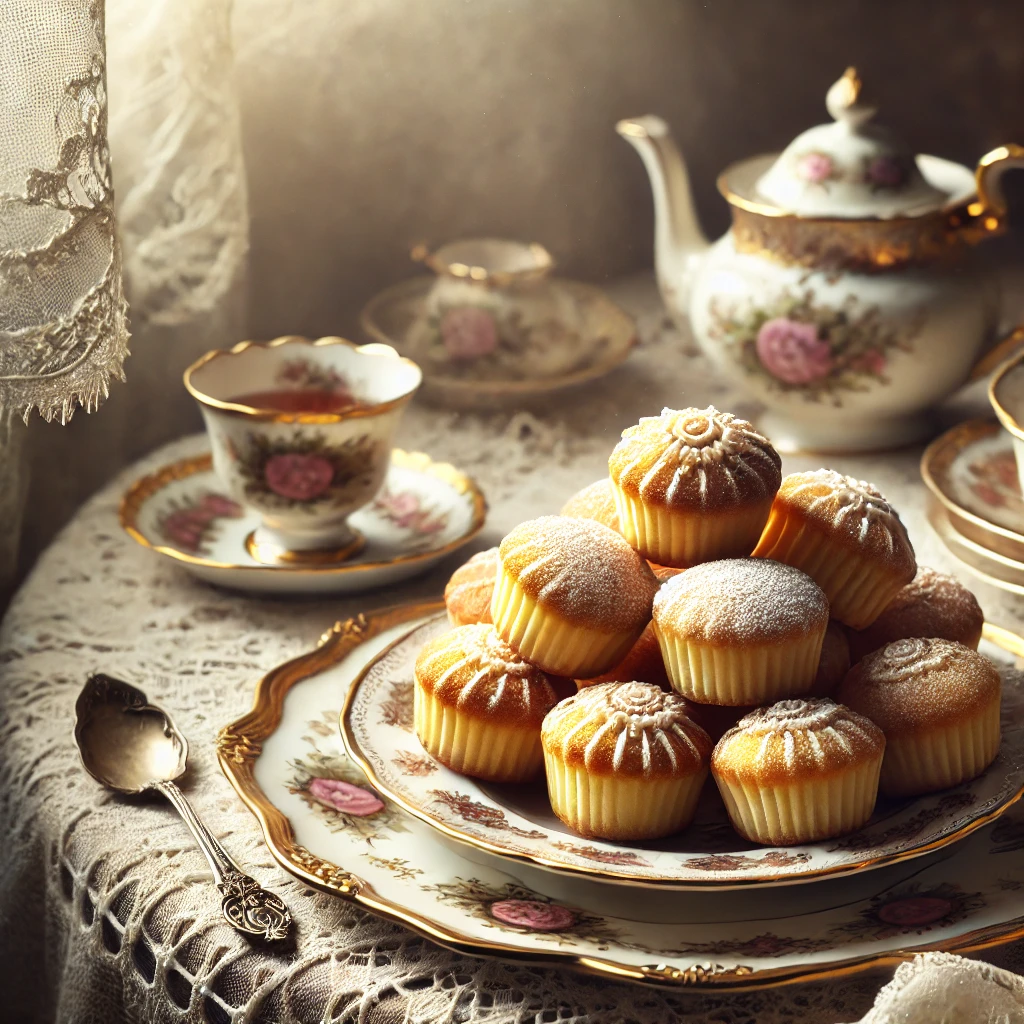
Victorian Tea Cakes with Rosewater Icing A Taste of 1800s Snack/Dessert
Tea time in the Victorian era (1837–1901) was an elegant and refined affair, filled with delicate treats and fragrant teas. Victorian Tea Cakes were one of the most beloved afternoon delicacies, often served with clotted cream, fresh preserves, and floral-scented teas.
Unlike modern cakes, Victorian tea cakes were light, subtly sweet, and often flavored with rosewater or citrus zest, making them a perfect complement to tea without being overly rich. The addition of rosewater icing gave these cakes a floral, sophisticated touch, making them a favorite at high-society tea parties.
The History Behind Victorian Tea Cakes with Rosewater Icing
The tradition of afternoon tea was introduced in England during the 1840s, credited to Anna, the Duchess of Bedford, who wanted a light meal to bridge the gap between lunch and dinner. By the mid-1800s, tea time had become a daily ritual among the upper and middle classes, featuring an assortment of small cakes, finger sandwiches, and biscuits.
Tea cakes were small, soft, and mildly sweet, often flavored with vanilla, nutmeg, or rosewater. Rosewater was particularly popular in Victorian baking, as it was more affordable and accessible than vanilla extract, which was considered a luxury at the time.
Interesting Facts:
- Rosewater was commonly used in Victorian-era baking before vanilla extract became widespread.
- Tea cakes were often served with clotted cream and preserves, much like scones today.
- Cookbooks from the late 1800s, such as Mrs. Beeton’s Book of Household Management (1861), featured recipes for simple cakes flavored with spices and floral waters.
- Tea cakes were usually baked in small tins and had a soft, fluffy texture, unlike the dense fruit cakes of earlier centuries.
The Original Recipe (As Written in History)
This authentic 1800s Victorian Tea Cake recipe is adapted from Mrs. Beeton’s Book of Household Management (1861):
Victorian Tea Cakes (1861 Version)
Ingredients:
- 1 pound flour
- ½ pound sugar
- ½ pound butter
- 2 eggs
- 1 teaspoon nutmeg
- 1 teaspoon rosewater
- 1 teaspoon baking soda
- 1 cup milk
Instructions:
- Preheat oven to 350°F.
- Cream butter and sugar together until light and fluffy.
- Beat in eggs, then stir in nutmeg and rosewater.
- Sift flour and baking soda together and gradually add to the wet mixture.
- Stir in milk until a smooth batter forms.
- Spoon batter into small greased cake tins or muffin molds.
- Bake for 20–25 minutes, or until golden brown.
- Let cool before icing with rosewater glaze.
(Original terminology preserved for historical authenticity.)
Modern Adaptation for Today’s Kitchen
This updated version enhances the lightness and flavor while keeping the delicate floral notes intact.
Ingredients:
For the Tea Cakes:
✅ 2 cups all-purpose flour
✅ 1 teaspoon baking powder
✅ ½ teaspoon baking soda
✅ ½ teaspoon salt
✅ ½ teaspoon nutmeg
✅ ½ cup unsalted butter, softened
✅ ¾ cup granulated sugar
✅ 2 large eggs
✅ 1 teaspoon vanilla extract
✅ 1 teaspoon rosewater
✅ ¾ cup whole milk
For the Rosewater Icing:
✅ 1 cup powdered sugar
✅ 2 tablespoons milk (or cream)
✅ 1 teaspoon rosewater
✅ Pink food coloring (optional)
Instructions:
- Preheat oven to 350°F and grease a muffin tin or small cake molds.
- In a bowl, whisk together flour, baking powder, baking soda, salt, and nutmeg.
- In a separate bowl, cream together butter and sugar until light and fluffy.
- Beat in eggs, vanilla extract, and rosewater until well combined.
- Gradually add the dry ingredients, alternating with milk, mixing until a smooth batter forms.
- Spoon batter into the prepared tins, filling each about ¾ full.
- Bake for 18–22 minutes, or until a toothpick inserted in the center comes out clean.
- Let cool before icing.
For the Icing:
- In a small bowl, whisk together powdered sugar, milk, and rosewater until smooth.
- Add a drop of pink food coloring if desired.
- Drizzle icing over cooled cakes and allow to set before serving.
🔹 Tip: Garnish with dried rose petals or sliced almonds for an elegant finishing touch!
Tasting Notes & My Experience
These Victorian Tea Cakes are light, buttery, and delicately flavored, with a hint of nutmeg and rosewater that makes them fragrant and unique.
The rosewater icing adds a subtle floral sweetness, making the cakes feel sophisticated yet comforting. Compared to modern cupcakes, these cakes are less sugary and more balanced, making them perfect for pairing with tea.
Suggestions for Variations:
- For a citrus twist, add a teaspoon of lemon zest to the batter.
- For a richer cake, substitute half of the milk with heavy cream.
- For a nutty texture, fold in ¼ cup of chopped almonds.
Final Thoughts & Call to Action
If you love historical baking and elegant tea-time treats, Victorian Tea Cakes with Rosewater Icing are a must-try! They’re simple to make, beautifully fragrant, and perfect for a vintage-inspired afternoon tea.
💬 Have you ever baked with rosewater? What’s your favorite tea-time treat? Let me know in the comments!
🍽️ Looking for more forgotten recipes? Check out:
👉 [Victorian Steamed Suet Pudding – A Classic 1800s Dessert]
👉 [Gilded Age Oyster Pie – A Luxurious 1890s Dish]